

A Practical Guide for Brands Creating High-Impact Packaging
When a customer first encounters your product, the packaging is what speaks before your brand does. In a retail aisle crowded with competitors, your folding carton must capture attention, communicate value, and reflect your brand personality within seconds. Companies like Print Packaging China make this process easier with completely customizable designs, high-quality printing, and the ability to upload your own artwork or use ready templates, but the fundamentals of great carton design remain universal.
Whether you’re a startup or an established brand looking to refresh your look, here are the five most critical design elements to focus on when creating custom folding cartons that truly stand out.
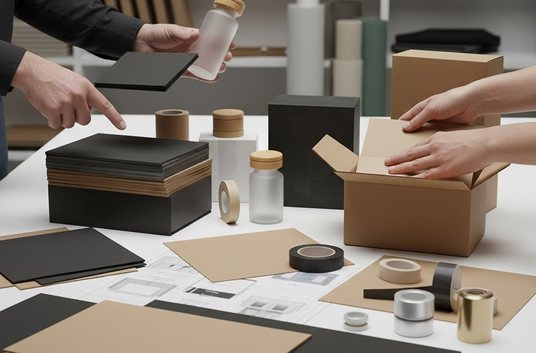
1. Material Selection: The Foundation of a Strong Design
The first design decision is choosing the right material. It determines how your carton feels, how durable it is, and how well your print details will appear.
Common material options:
- Folding Carton Board (FBB): Lightweight, smooth surface, great for cosmetics and retail items.
- Kraft Paperboard: Eco-friendly, rustic, natural look perfect for organic or sustainable brands.
- Corrugated Board (light grades): Offers additional protection for fragile or heavier products.
Tips for choosing materials:
- Match material to product weight and fragility.
- Consider your brand identity: luxury brands lean toward smooth coated boards; natural brands prefer kraft or uncoated stock.
- If sustainability matters to your audience, choose recyclable or biodegradable boards, which Print Packaging China offers as part of their eco-friendly options.
2. Finishes That Elevate the Look: Matte, Gloss, Spot UV and More
Finishes influence the perception of quality and make your carton look premium on the shelf.
Popular finishing options:
- Matte Lamination: Soft, modern look; reduces glare; great for premium or minimalistic designs.
- Gloss Lamination: Shiny, bright finish that enhances colours and catches light.
- Spot UV: High-gloss contrast applied to specific elements like logos or patterns.
- Foil Stamping and Embossing: Adds depth, luxury, and tactile appeal.
How to choose:
Use matte for elegance, gloss for vibrancy, and spot UV to emphasize key design elements. If your product is high-end, combine embossing or foil with matte laminate for a striking contrast.
3. Die-Cuts and Windows: Add Personality and Function
Die-cutting transforms simple cartons into memorable shapes and interactive experiences.
Ways to use die-cuts effectively:
- Window cut-outs that reveal the product inside (common in beauty, bakery and retail packaging).
- Unique shapes, tabs or angled edges that distinguish the brand.
- Functional die-cuts such as hang tabs for retail displays.
A creative die-cut can turn packaging into a key selling point. For example, a small window that showcases the exact shade of a cosmetic product can reduce return rates and increase buyer confidence.
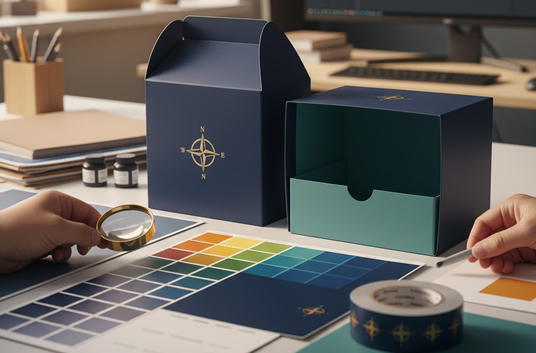
4. Brand Colours and Print Quality: Make Your Identity Unmissable
Colour is one of the strongest branding tools, and folding cartons offer a perfect canvas for bold colour expression.
Key considerations:
- Use brand colours consistently to build recognition across every product line.
- Ensure colour accuracy by using CMYK or Pantone colour matching, which Print Packaging China supports through its advanced printing process.
- Balance bold colours with negative space for readability and visual comfort.
- Include your logo prominently, but not overpoweringly.
Good packaging printing ensures your colours remain true, vibrant, and aligned with your digital branding across batches and reorders.
5. Structural Design: Where Form Meets Function
A folding carton must not only look good but also perform well through shipping, handling, and shelf display.
Structural design elements to evaluate:
- Tuck-end boxes (standard, economical, great for lightweight products).
- Auto-bottom or crash-bottom boxes for added strength and faster assembly.
- Lock-bottom cartons for premium product support.
- Sleeve cartons that slide over trays for a luxury feel.
Tips for picking the right structure:
- Match the structure to product weight and required protection.
- Consider storage and transportation: flat-packed designs reduce freight cost.
- Think about unboxing experience: how the customer opens the box affects perception.
- Test with a physical sample, which Print Packaging China allows before bulk production.

Tips for Companies Designing Their Own Folding Cartons
If your design team is preparing the artwork in-house, keep these practical guidelines in mind:
- Follow dieline templates exactly
Use the provided dielines from Print Packaging China to avoid alignment issues, cut errors or poor fold integrity. - Add bleed margins
At least 3 mm bleed ensures your design prints edge-to-edge without white borders. - Use high-resolution images
All images and graphics should be 300 DPI or above for crisp printing. - Keep text away from fold lines
Minimum 3–5 mm spacing prevents text from appearing distorted or cut off. - Prioritize readability
Avoid overly fancy fonts for product info, ingredients or instructions. - Request a printed proof
Always check physical samples for colour accuracy, structural fit and finish quality.
Final Thoughts
Beautiful packaging is a powerful marketing tool. By combining the right materials, finishes, die-cuts, brand colours and structural engineering, brands can create folding cartons that demand attention and elevate the entire product experience. With a partner like Print Packaging China, who provides completely customizable designs and options to upload your own artwork or choose from professional templates, bringing your packaging vision to life becomes both simple and economical.